What Can We Do at Home?
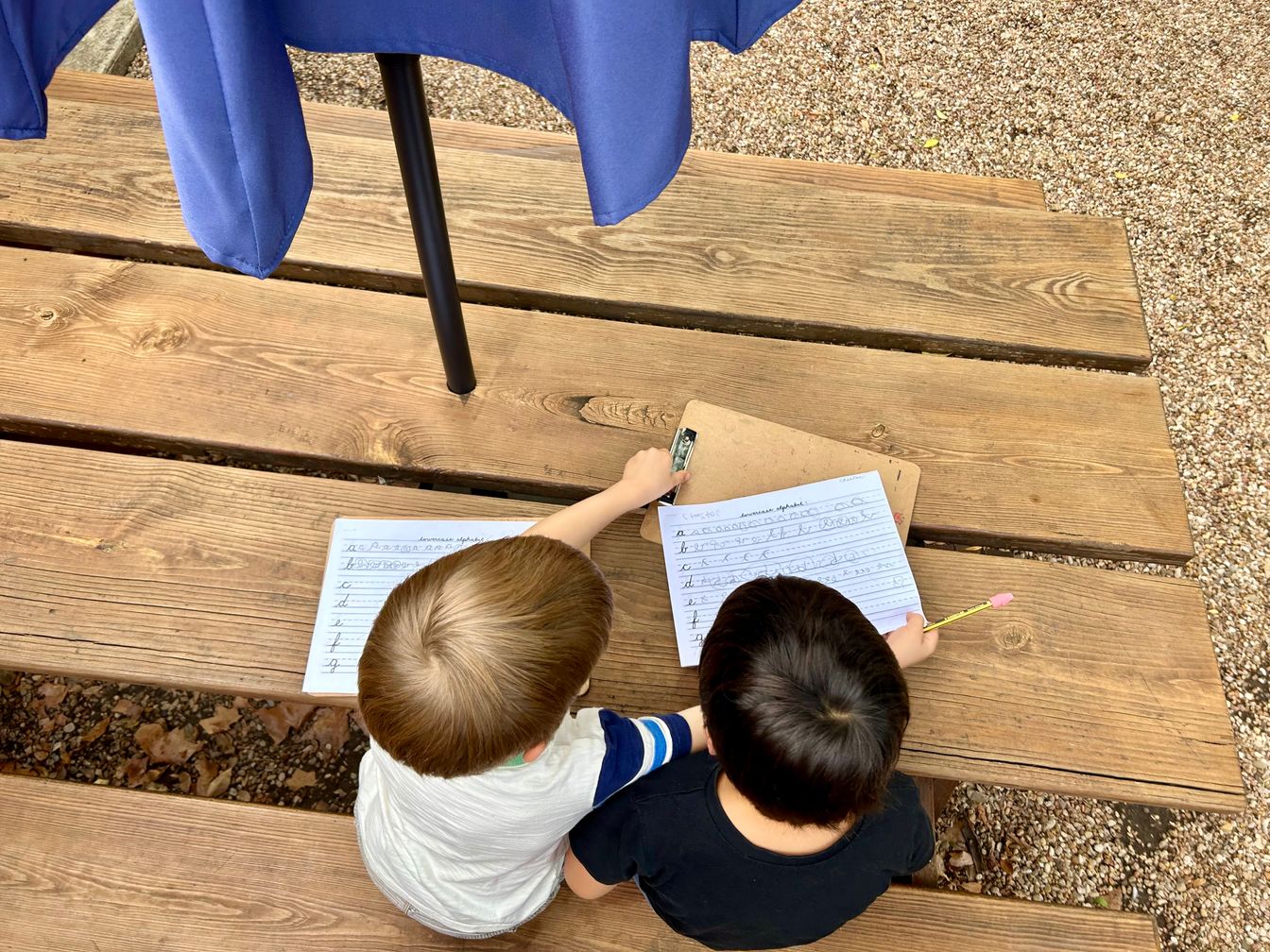
What can we do at home?
As the Inclusion and Support Specialist at Austin Montessori School, one question I often hear from parents is, “What can we do at home?” This partnership between the school and parents in supporting the child’s growth is one of the unique qualities that makes Austin Montessori School so special.
When it comes to reading, it’s important to remember that humans aren’t born with a natural ability to read, as we are with vision or speaking. Reading requires hundreds, even thousands, of exposures to letters and words to build the brain pathways that make reading almost automatic. In other words, it’s big, big work that requires support both at school and at home.
Here are some practical strategies to support your child’s language development, both in oral language and literacy.
Small, doable, every day.
1 | Read aloud regularly Reading aloud expands vocabulary, introduces new perspectives, and builds background knowledge. It also allows you to model fluent reading with expression, which is critical for your child’s reading development. |
2 | Play “Snail Speak” This game is a playful way to build phonological awareness by practicing blending sounds. For example, you might say, “Pass me the (spoon),” but stretch the word out slowly: “Ssssssppppppppoooooonnnnnn.” This practice helps children tune in to sounds blended together, an essential skill for reading. |
3 | Try “Robot Talk” Another engaging game, Robot Talk helps children practice segmenting sounds. Instead of saying, “It is time to go,” use individual sounds, as if a robot were speaking: “i-t i-s t-I-m t-oo g-O.” This supports their ability to hear and work with sounds in words. |
4 | Encourage storytelling and retelling Retelling stories strengthens comprehension skills and builds narrative understanding. A fun resource for elementary-aged children are these audio recordings of Aesop’s fables at classictales.co.uk/fables. Listen together, then take turns retelling the story. The ability to retell is an essential skill for comprehension. |