Montessori education is not a narrow teaching method but a broad philosophy of life that rests in faith in each child as a potential new beginning for humanity and the creator of the adult they will become.
Every child possesses an inner force that drives them to grow and learn, observed in their spontaneous activities. We respect this natural curiosity, which makes learning an imperative, as much a fundamental need to the child as food, shelter, and love. Our role, as adults, is to observe the child's natural interests and provide an environment where they can develop and learn.
Dr. Maria Montessori believed that self-motivation is the only valid impulse for learning. Within the carefully structured order of the Montessori classroom, the child is free to choose their own projects throughout the day. Following their inner direction, they discover their unique pattern of learning and find satisfaction in work.
Montessori is the single largest pedagogy in the world, with roughly 600 public and 4,000+ private Montessori schools across the United States alone.
Dr. Maria Montessori, a physician before she was an educator, built her method empirically, through years of systematic observation. She recorded how children engaged, tested each material against their response, and kept only what proved reliable. Her insights into cognitive development, which anticipated what we now call neuroplasticity, have since found support in peer-reviewed developmental psychology and neuroscience. Studies have linked a Montessori education to measurable gains in attention, executive function, and self-regulation.
See the research →Development follows no single timeline, and the Montessori method does not impose one on the child either. Instead, it offers the greatest possible choice of purposeful physical and mental activity, so a child can take up each piece of work at the exact moment of readiness, when the developing brain is primed to absorb it. Progress is not dictated by a fixed schedule of what must be known and when; the classroom is built to meet each child where they are, and to let mastery, not the calendar, be the measure of a child's growth.
Read more →It allows the child to grow in independence by respecting their needs and trusting their inner direction. The liberty children experience is not a permissive license, but the path to genuine interest and self-discipline.
Montessori removes competition as the prime motivation for learning. Dr. Montessori's insight was more radical: children are already deeply motivated to learn. The task of the school is to prepare the environment, offer work matched to a developmental moment, uninterrupted time to concentrate, and a Guide who deeply understands the method and your child.
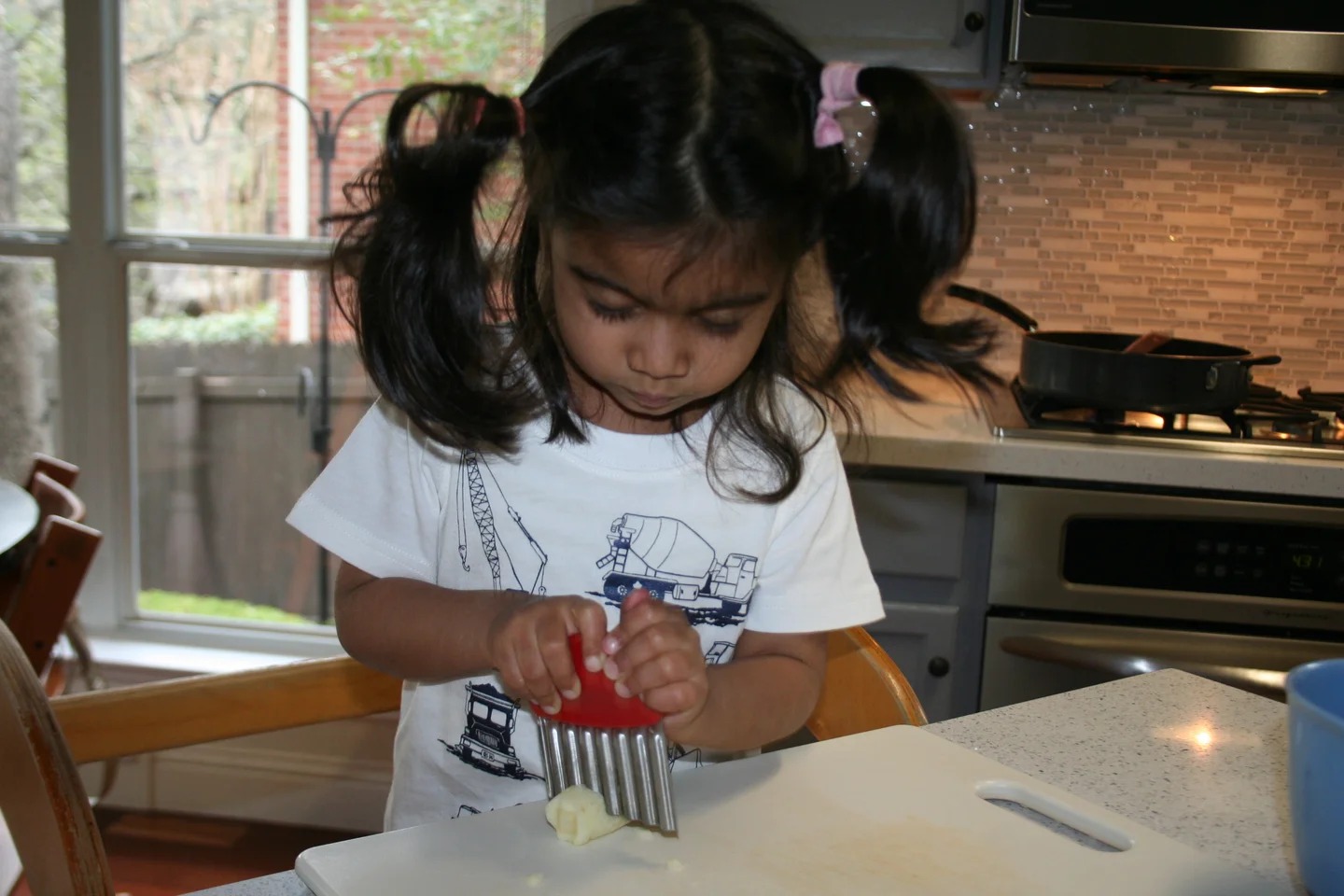
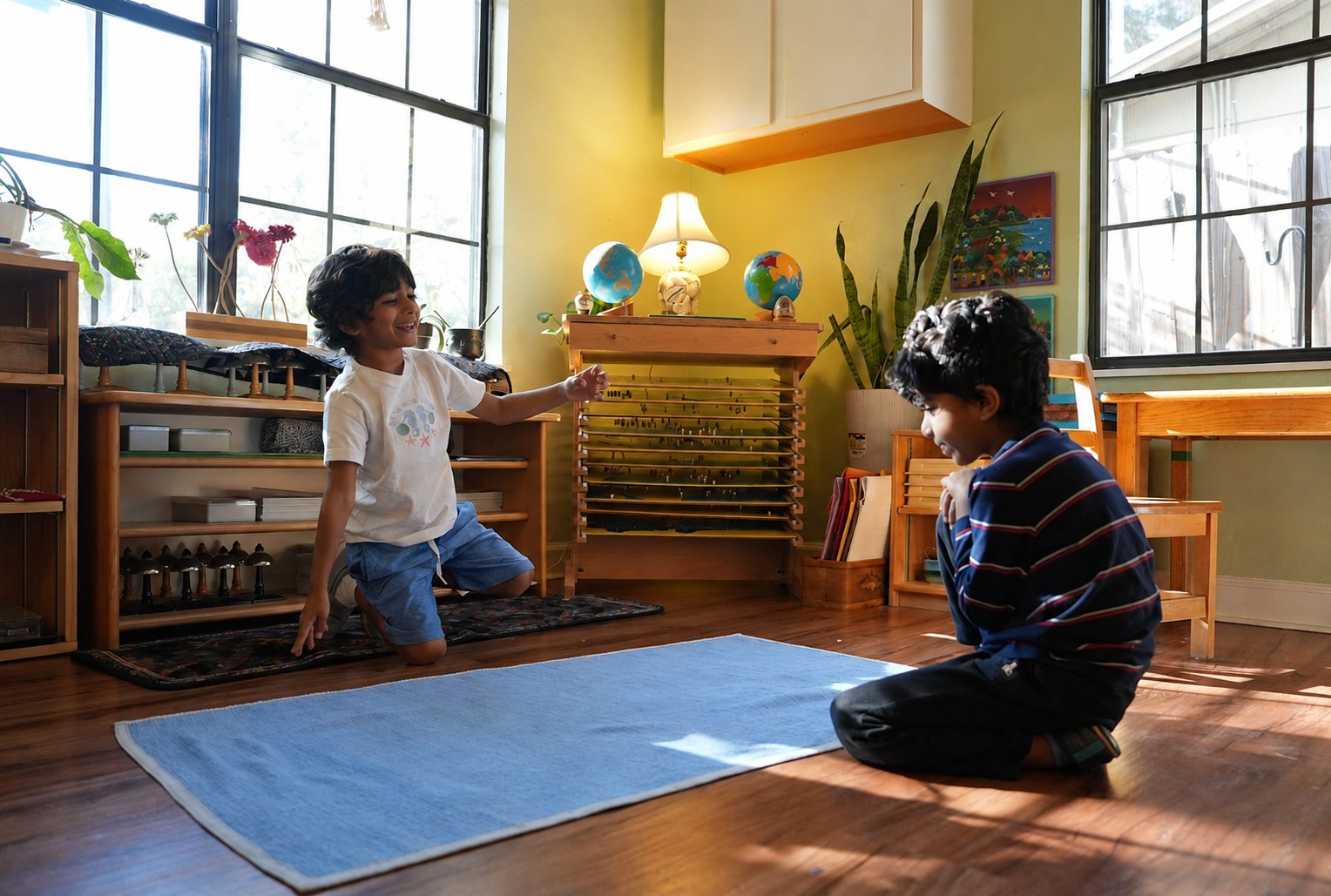
The Montessori classroom, often called a "prepared environment," is a space built with purpose: designed to meet the child developmentally and physically, and to offer what they are driven to understand about the world at each stage of growth. Every object, and furthermore every material Dr. Montessori designed herself, exists there for a greater purpose. A chain of beads gives a number weight the hand can feel, bringing the abstract idea of addition into a concrete, tactile experience. The pressing of a lemon in a juicer refines the very grip that will one day form letters. Each, however simple it seems, holds far more than it shows: a concept, a movement, a discipline of attention, distilled from a century of observation into a single thing, placed so precisely, and yet so naturally, that it waits right there to catch the beautiful moment a child's curiosity is sparked.
As such, any school can claim to make use of the educational method. The Association Montessori Internationale (AMI), founded by Dr. Montessori herself and directed from the Netherlands, trains teachers and accredits schools in a manner that closely aligns with her original philosophy and pedagogy.
Austin Montessori School is recognized by AMI. All our lead Guides, our Head of School, pedagogical directors, and most senior administrators are AMI-trained. AMI teacher training is rigorous: a full academic year or three summers of study, culminating in the inspection of student-written teaching albums and several days of oral and written exams.
AMI offers diplomas for Assistants to Infancy (0 – 3), Primary (2.5 – 6), Elementary (6 – 12), and Adolescence (12 – 18). Only a limited number of individuals complete the training each year, and they are in high demand around the country and the world. AMS is also accredited by the Texas Alliance of Accredited Private Schools (TAAPS).
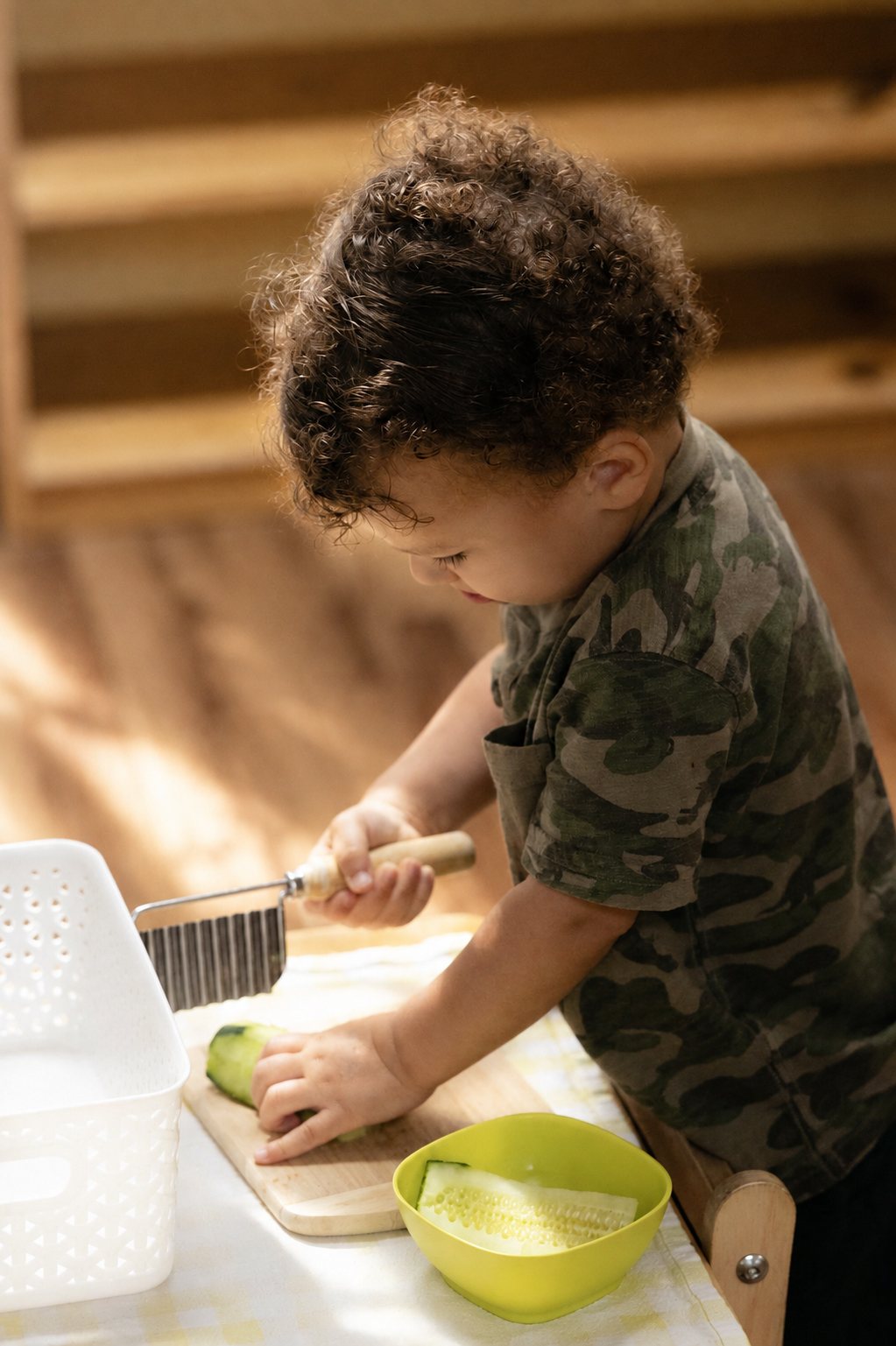
The Youngest Children's Community is our Montessori toddler program. The work of the youngest child is to begin building themselves, learning balance and movement, first words, independence, and care for the people and things around them. In an unhurried, homelike environment, a specially trained Guide responds to each child's needs and helps a sense of belonging grow.
These earliest years are protected and met on the child's own terms. Full-day and half-day options are offered, in school-year and year-round programs.
Offered at our Sunset Trail and Great Northern campuses.
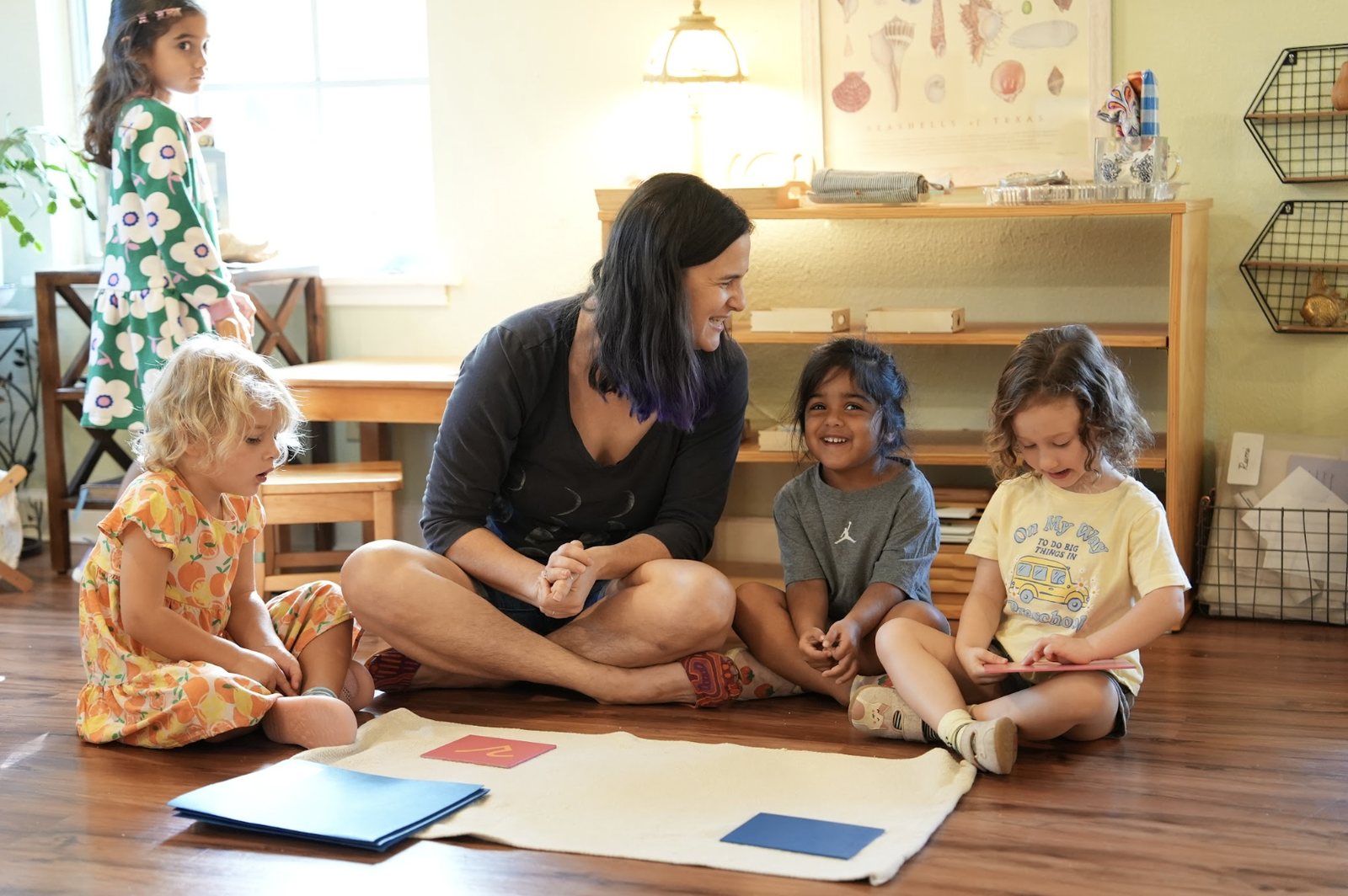
The Children's House, our primary community for children from around 2½ years, is a prepared environment where children live and learn together. Through long, uninterrupted mornings, children of mixed ages choose their own work and begin what Maria Montessori called self-construction.
A trained Guide knows each child closely. As children take on real, purposeful work, they grow in concentration, independence, clear thinking, and care for the community, and self-discipline follows. Full-day and half-day options are offered five days a week, with summer sessions available.
Offered at our Sunset Trail and Great Northern campuses.
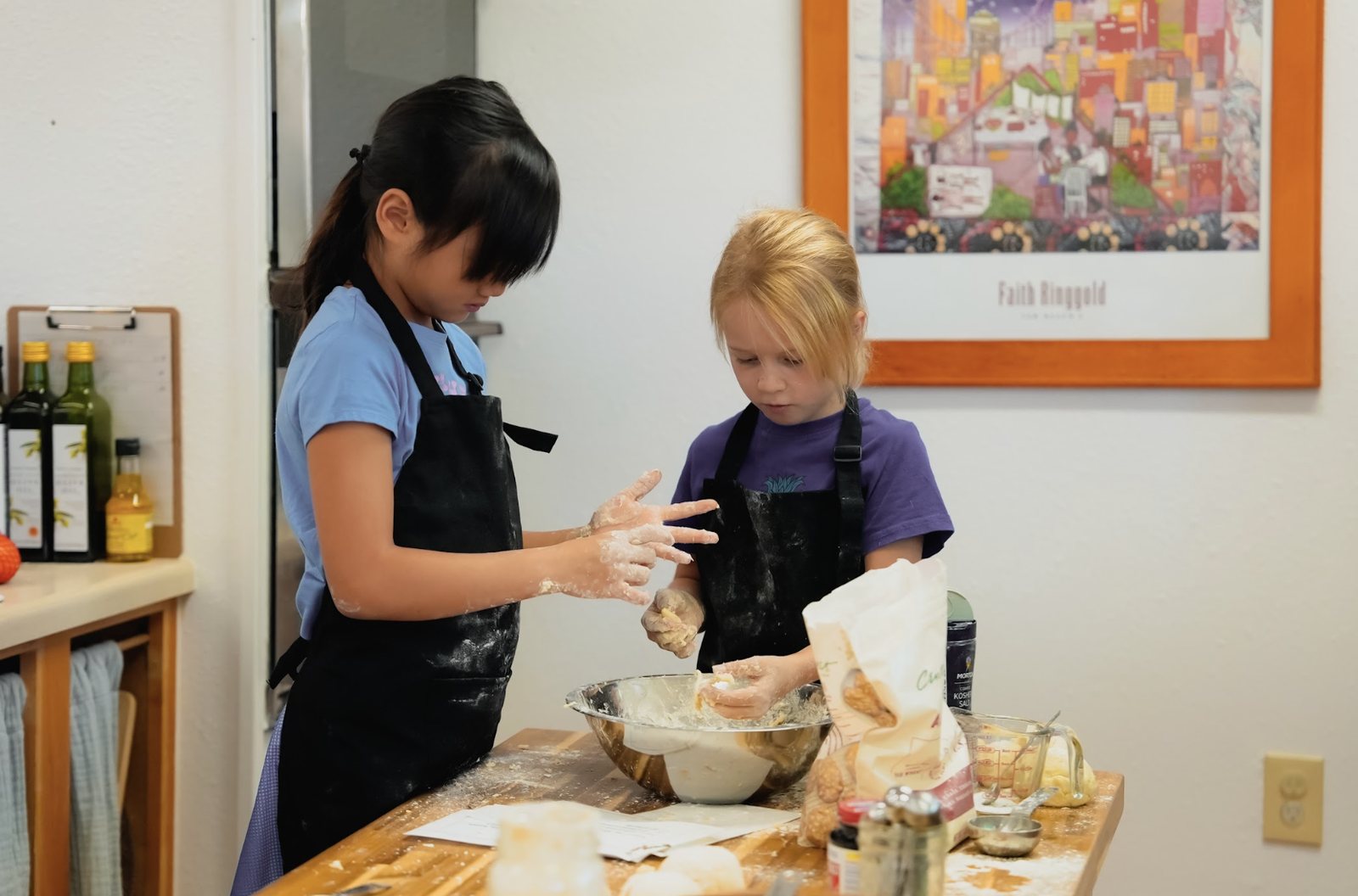
Between six and twelve, children are imaginative, curious, and keenly interested in fairness. It is a period of real intellectual growth: reading and writing deepen, mathematics moves from concrete materials to abstract reasoning and geometry, and children study science, history, and geography in depth.
Each year opens with the Great Lessons, the stories of the universe, life, and human beings, giving children a vision of the whole before they follow their own questions into the detail. Children learn in mixed-age communities of six to nine and nine to twelve, and each child is deeply known by their Guide across the three-year cycle. After-school care and enrichment through summer are offered.
At our Sunset Trail campus.
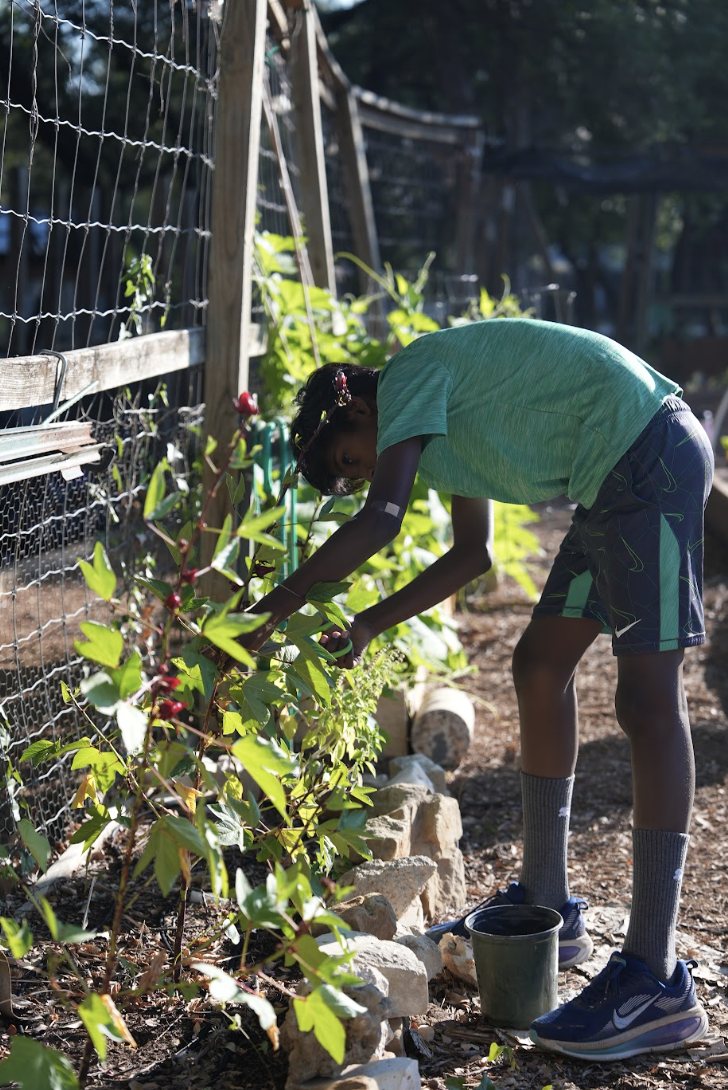
Our Center for Work and Study at Gaines Creek is the only AMI-recognized Montessori adolescent program in Austin. On three and a half acres of working land, our adolescents tend a market garden, raise chickens, keep an apiary, run a kitchen, and operate a small coffee shop.
The work is real, measured, and useful. In cooperation with the land and the community around them, young people learn firsthand how knowledge, responsibility, and contribution fit together, alongside an integrated humanities and sciences curriculum that prepares them for whatever they choose next.
At our Gaines Creek campus.
The brain uses more energy than any other organ in the body. We recommend a diet high in protein, rich in whole fruits and vegetables, with whole-grain breads and cereals. We share food preparation with the children in the classroom, and we hope the meals they bring from home belong to the same world.
Read the lunch guidelines →Current research shows digital media can have unwanted effects on developing children, particularly in early childhood. Our classrooms are screen-free below the elementary level and used only with deliberate intent above it. Time spent enthralled by screens is time not spent on activities that have positive effects on development.
Read the Screen Media Policy → Our screen-free approach →If this page interested you, the faculty essays in Living Montessori go deeper, on Cosmic Education, the prepared environment, what AMI recognition really asks of a school.
Read Living Montessori → Arrange a visit →